
From A Great Dementia Coach to an Extraordinary Dementia Champion
Posts about:


With NBA's basketball season in full swing and NFL's Superbowl around the corner, no one doubts the incredible impact a good coach has on developing both the physical and mental strengths that lead to the success of sports teams. Today, coaches are proving their value in a diversity of areas: Whole Life Coach, Communications Coach, Wellness Coach, Career Coach, Weight Loss Coach, Business Coach, and even Relationship Coach.
In the sea of dementia care training, leaders can be overwhelmed when evaluating options. This article provides practical guidance if you are just getting started in creating a dementia training program or if you are re-evaluating current practices.
Before you learn the six components that define quality dementia care training, I'm going to discuss four fundamental truths:
We Must Educate, Engage, and Retain Employees
Aging service providers are experiencing dangerously high staff shortages that impact the quality of care, employee retention, and family satisfaction. These together directly affect the bottom line.
Studies reveal a correlation between the lack of investment in care team education and turnover, with staff reporting feeling ill-prepared for their work with older adults, especially those with memory loss. It's time for a change!

Take a listen to a conversation between two industry leaders talking about training and education evolutions and strategies for success.

When we think of the word "home" it elicits more emotions and memories than any other word in the English language. Do we in Aging Services give enough consideration to the emotional impact that leaving home has on elders? Imagine leaving home and believing you will never return. Are we doing enough as caregivers to recognize and acknowledge the impact leaving home has on elders?
As we age, the need to relocate may occur several times. People may move from an established home of 40 years to a retirement community with desirable amenities or smaller quarters to reduce the burden of property upkeep. They may even move to be closer to family or a residential care facility. An important consideration for families and caregivers is the possible impact of relocation. What do we do to help?
Our natural responses could be: "It's OK, this is your new home" or "It just takes time to adjust." Many of us want to respond by giving advice, trying to cheer up our elderly family member, or changing the subject. We mean well, but these responses stifle communication and understanding things from another person’s viewpoint. No doubt, these are sincere efforts to comfort and reassure, but let's consider how we can take our compassion one step further by employing empathy.
Empathy is putting yourself in someone else's shoes in order to imagine what they are going through, understand, and even share their feelings.
According to Stanford University graduate Ted Talker Mike Robbins, empathy is one of the most critical aspects of creating solid relationships, reducing stress, and enhancing emotional awareness.
His 2021 blog provides the following benefits of empathy:
After acknowledging the feelings, you can then continue by validating, "It must be hard to miss your cat so much." Giving your care partner the time to express feelings and then validating those feelings is the most helpful approach you can offer because you cannot change anything about the reality of the situation.
Can empathy be taught? Absolutely! Would your staff benefit from a deeper understanding of empathy?


About the author:
Julie joined the AGE-u-cate team in 2020 after working 31 years in nursing home operations. Starting in social services and admissions, she moved into management and executive positions in 1990 after obtaining an Illinois nursing home administrator license. Her passion for dementia capable care came early in her career when she had the good fortune to work with and learn from culture change pioneers. Julie is also an adjunct instructor in Gerontology and Aging Services at Northern Illinois University in DeKalb, IL. She has two adult children and lives in the Northwest Chicago Suburb of Schaumburg with her husband and three fur babies. She is convinced that she was a lounge singer in a former life.

Dementia Competencies and How to Choose Good Education
Hosted by Joan Devine, the Pioneer Network presented an outstanding webinar entitled, "Dementia Competencies and How to Choose Good Education." The Dementia education universe is vast and varied, and it can be difficult to navigate to the most effective and relevant training.
The opening message offered by presenter Kim McRae, Founder of "Having a Good Life" and Co-Founder of the Culture Change Network of Georgia is that we should not use "Alzheimer's" as the general term for dementia. This causes a lot of confusion and marginalizes those living with dementia not related to Alzheimer's. As leaders, we need to be consistent in and steadfast in understanding this important distinction.
Jennifer Craft Morgan, Director and Associate Gerontology Professor at Georgia State University made a salient point that education and knowledge acquisition is important, but it must lead to skill-building. "Surface learning" alone will not change employees' care approaches.
Improving education and training and developing supports for direct care workers to implement skills in context has the potential to transform the workforce to a dementia-capable, culturally competent workforce. - Jennifer Craft Morgan.
Check out quality education programs provided by AGE-u-cate here:

So, if change is what we are after, then the first criteria to evaluate is whether the chosen curriculum will result in modifying employee care actions.
Kim McRae, Founder of "Have a Good Life" and Co-Founder of the Culture Change Network of Georgia cautioned listeners to avoid narrowly viewing people living with dementia from the standpoint of loss and deficits. In doing so, we create stigma, loss of well-being and excess disability. Training must un-do the "patients vs people" approach of the past and inspire the workforce to see the human being first.
The speakers then discussed language that should be used in training curriculum, because words absolutely matter.
"Living with dementia vs suffering with dementia"
"Responding to stress reactions vs managing unwanted behaviors"
Just as important as the content is the delivery. The presenters asked attendees to think back to their last training and identify the things that the instructor/training did that didn't support learning.
Helpful list of what not to do
Another critical point is that training should not be one-and-done. Learning must be consistent and ongoing, and reinforced by leadership. Leaders need to excite their employees! Talk with them about what they learned and how it can be applied to achieve person-centered care and improve the quality of life for elders.
In summary, training curriculum as offered by Ms. McRae and Dr. Morgan should:
Many thanks to the Pioneer Network and presenters for this critical and timely information.
About the author:
Julie joined the AGE-u-cate team in 2020 after working 31 years in nursing home operations. Starting in social services and admissions, she moved into management and executive positions in 1990 after obtaining an Illinois nursing home administrator license. Her passion for dementia capable care came early in her career where she had the good fortune to work with and learn from culture change pioneers. Julie is also an adjunct instructor in Gerontology and Aging Services at Northern Illinois University in DeKalb, IL. She has two adult children and lives in the Northwest Chicago Suburb of Schaumburg with husband and three fur-babies. She is convinced that she was a lounge singer in a former life.
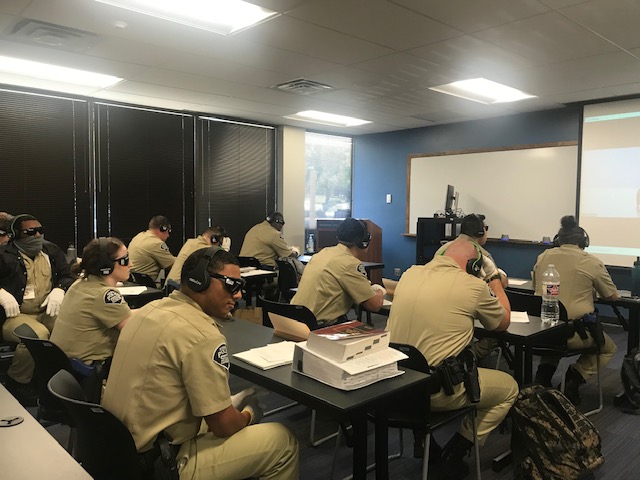
In dementia simulation programming, there's a lot to say about what makes Dementia Live stand out. Since its launch in 2015, the team here at AGE-u-cate® has spent more time listening to our client partner's needs than talking. The result?
A program that is indeed what our tag line says: Proven. Powerful. Effective. Tag lines can get wordy, so we'll discuss another significant benefit:
Dementia Live is incredibly flexible.
As empathy and skill-building training, Dementia Live brings together a transformational experience, care partners empowerment session, and practical tools to professionals and families across the aging care spectrum. The team at AGE-u-cate believes that EVERYONE needs to better understand dementia.
We are at the crossroads of unprecedented growth in our aging population, which will continue to affect every aspect of our society. Therefore, aging and dementia education is necessary for breaking the cycle of ageism and exclusion for persons living with cognitive changes. Our provider partners are key catalysts to offer this critical dementia awareness experience and education to the world.
Dementia Live coaches receive organized, easy to deliver training which allows them (provider organizations) to take the Dementia Live program beyond the walls of their own organization. We provide the tools and resources to adapt to ever-changing circumstances, such as a virtual version of the Experience developed in response to the COVID pandemic. This Virtual Dementia Live Experience allowed providers to continue to use the program as an outreach education tool while social distancing restrictions were in place. Here's what The Alzheimer and Parkinson Association of IRC had to say about AGE-u-cate's pivot to a Virtual Experience during Covid.
