The Heart of Care: How Empathy Drives Better Clinical Outcomes
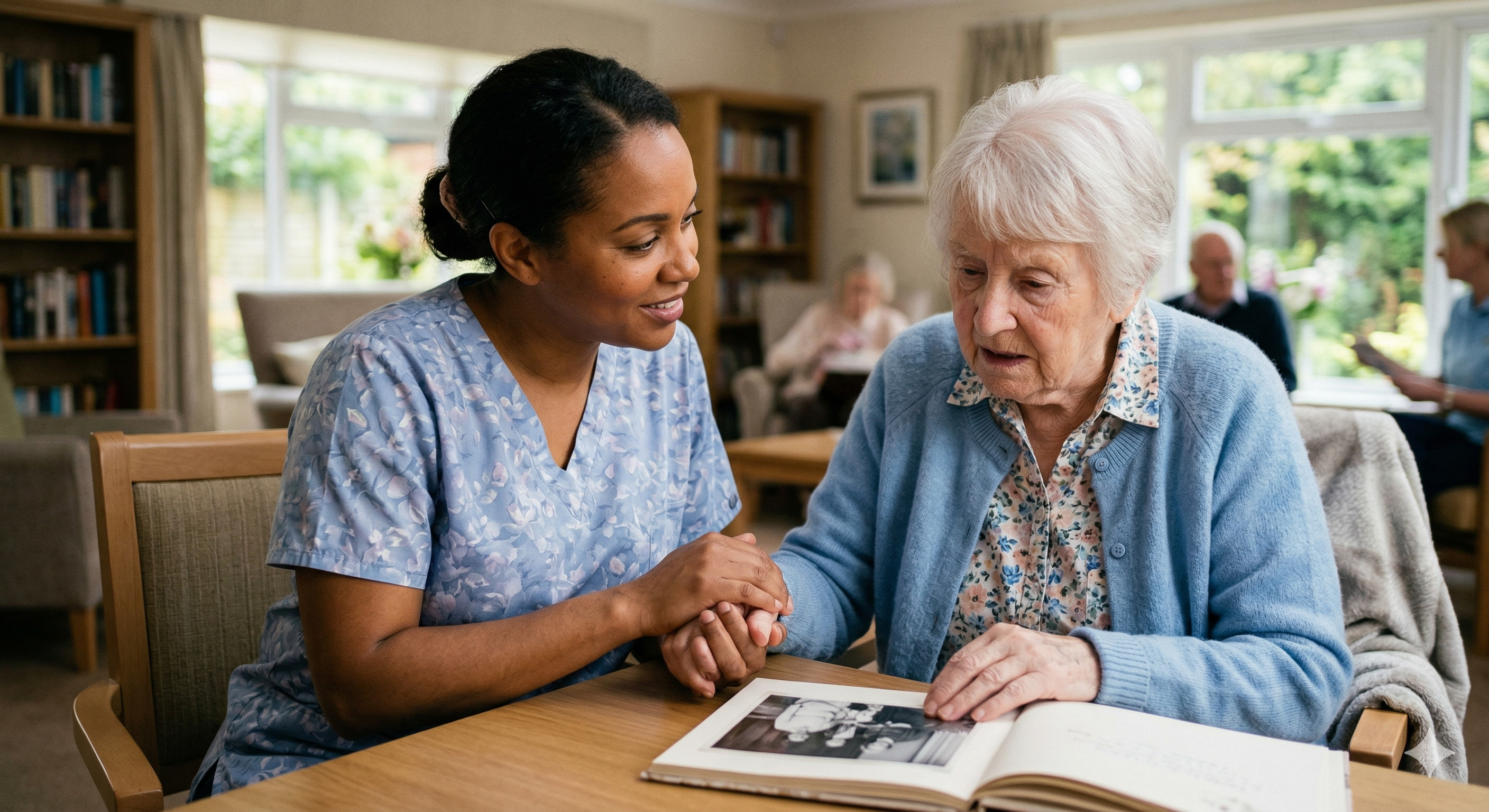
When it comes to senior living and dementia care, the difference between management and meaningful support often lies in a single, fundamental human element: empathy.
For years, clinical training focused almost exclusively on the mechanics of care—medication administration, hygiene protocols, and safety compliance. However, as the industry shifts toward person-centered models, we are discovering that empathy is not just a soft skill; it is a clinical powerhouse.
At AGE-u-cate Training Institute, we have witnessed a profound shift in how providers approach neurocognitive disorders. By utilizing empathy-based training, specifically through our Dementia Live® program, organizations are seeing a direct correlation between staff perspective-shifts and improved clinical outcomes.
How Can Sensory Perspective Help Decode Behavioral Expressions?
One of the greatest challenges in dementia care is the prevalence of disruptive behaviors. Traditionally, these were viewed as symptoms to be suppressed. Empathy-based training flips this script, teaching staff that behavior is a form of communication.
When a resident with dementia becomes agitated, they are often expressing an unmet need—perhaps they are in pain, overwhelmed by noise, or feeling a loss of autonomy. Dementia Live® uses specialized gear and sensory immersion to simulate the cognitive and sensory impairments associated with dementia.
By walking in the shoes of the resident, staff gain an immediate, visceral understanding of why a resident might strike out or wander. When staff can decode these expressions, they move from reactive policing to proactive support.
Is it Possible to Achieve Measurable Reductions in Resident Agitation?
The clinical impact of this shift is measurable. Agitation is frequently the result of a mismatch between the resident’s abilities and their environment. When staff are trained to recognize environmental triggers—such as harsh lighting or complex instructions—they can modify the surroundings and their own approach to de-escalate situations before they reach a crisis point.
Studies and field reports from AGE-u-cate partners consistently show that after implementing empathy-based simulations, the frequency of catastrophic reactions in residents decreases. This isn't because the disease has changed, but because the caregiver’s response has evolved.
A staff member who understands the frustration of being unable to find the right words is more likely to offer patience and therapeutic touch rather than escalating the tension with authoritative commands.
Can Empathy-Based Training Decrease the Reliance on As-Needed (PRN) Medications?
One of the most significant clinical benchmarks in senior care is the reduction of antipsychotic and sedative medications. While as-needed (PRN) medications are sometimes necessary, over-reliance on them can lead to increased fall risks, lethargy, and a lower quality of life.
Empathy-based training provides caregivers with a robust toolkit of non-pharmacological interventions. When a nurse or CNA understands the why behind a resident’s distress, they can often resolve the issue through environmental adjustments, redirection, or simple validation.
By teaching staff to meet the resident in their reality, AGE-u-cate helps care providers significantly reduce their PRN usage. This doesn't just improve the provider's quality ratings; it restores dignity and clarity to the residents themselves.
How Does Emotional Intelligence Boost Staff Retention?
Beyond the clinical charts, empathy-based training addresses the industry's greatest crisis: workforce burnout. Caregiving is exhausting, especially when staff feel they are battling residents. Empathy transforms this dynamic from adversarial to collaborative.
When staff feel equipped to understand and help their residents, their job satisfaction increases. They no longer feel helpless in the face of dementia; they feel like skilled communicators.
This sense of mastery and emotional connection is a proven buffer against burnout, leading to more stable care teams and better continuity of care for residents.
Why is AGE-u-cate the Right Solution for Your Organization?
At AGE-u-cate Training Institute, we don’t just provide information; we provide transformation. Our programs, including Dementia Live®, Compassionate Touch®, and Flashback™, are designed to be scalable, sustainable, and, most importantly, impactful.
We recognize that clinical excellence cannot exist in a vacuum. To truly improve outcomes, you must reach the hearts of those providing the care. AGE-u-cate’s evidence-informed training modules are built to fit into the busy schedules of healthcare professionals while delivering deep, lasting changes in perspective.
By choosing AGE-u-cate, your organization is committing to a higher standard of care—one where clinical outcomes are driven by a profound understanding of the human experience. Let us help you turn empathy into your most effective clinical tool.
Visit AGE-u-cate.com to learn how we can transform your care culture today.