
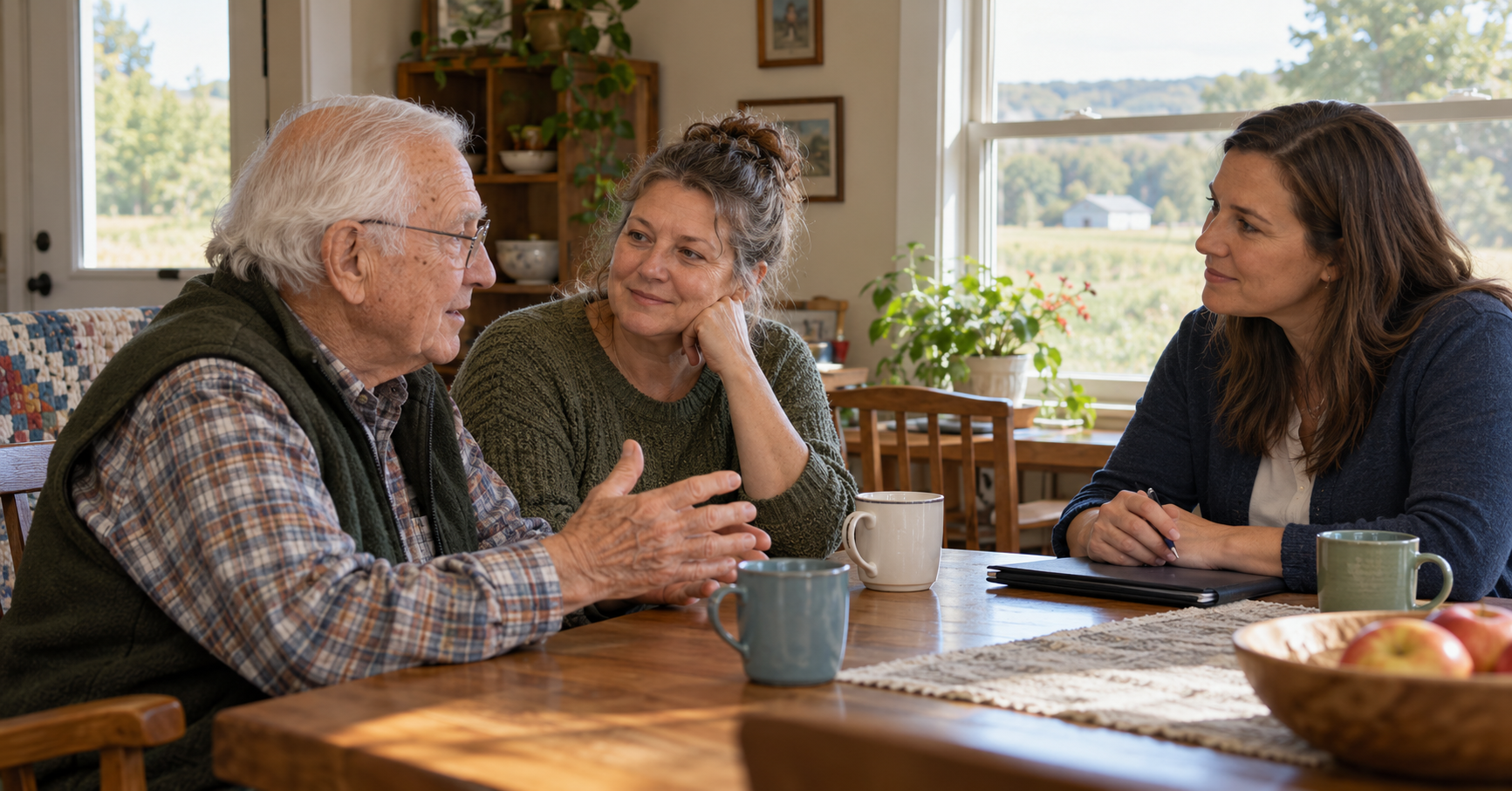
Rural Dementia Care: Lessons From the Care Ecosystem
For a family facing dementia in a rural community, receiving a diagnosis may be only the beginning of finding help.
Who can explain a change in behavior? Where can a caregiver find support? How do families connect recommendations from a medical appointment with the realities of daily life at home?
A study of caregivers in rural Western North Carolina identified unmet needs for information, service navigation, and caregiving support. It also found that local resources, cultural beliefs, and preferences for home-based care shaped families’ use of services. Access depends on more than whether a program exists; it also depends on whether families can find and use it. Read the research.
The Care Ecosystem offers a useful starting point for thinking about this challenge—and other community-based programs show how rural dementia support can take shape.
What is the Care Ecosystem?
Developed and tested by teams at the University of California, San Francisco and the University of Nebraska Medical Center, the Care Ecosystem connects people living with dementia and their caregivers with a trained care team navigator.
Navigators provide education, support, resource connections, and care coordination, with guidance from clinicians who have dementia expertise. Telephone-based contact allows families to receive ongoing help without traveling for every conversation. Explore the Care Ecosystem.
A 2019 randomized clinical trial included 780 people living with dementia and their caregivers across rural and urban areas of California, Nebraska, and Iowa. Compared with usual care, the program improved quality of life for people living with dementia, reduced emergency department visits, and decreased caregiver depression and burden.
These were findings across the full study population, rather than rural-only results. Still, the model provides a tested approach to reaching families across broad geographic areas. Read the study in JAMA Internal Medicine.
For rural health leaders, its design invites a practical question: How can a consistent, knowledgeable point of contact help families use the care and support available to them?
Southern Indiana: connecting dementia care with local support
The Rural Dementia Network of Southern Indiana illustrates what a coordinated local response can include.
Serving rural Lawrence and Orange counties, the network described services ranging from individualized family consultations and home visits to caregiver support groups, respite assistance, and referrals. It also provided dementia education for current and future nursing assistants and home health aides.
Its profile in the 2020–2023 Rural Health Network Development Sourcebook reported that more than 100 people living with dementia or caregivers were connected with resources through private consultation. More than 90 current or future professional caregivers received dementia-friendly care partner training. These are program-reported accomplishments, rather than findings from a controlled trial. Read the profile, pages 40–42.
This example places workforce education and family support within the same community effort. Both deserve attention when planning rural dementia services.
Georgia: reaching caregivers through trusted relationships
The Dealing with Dementia–Alter initiative brings another dimension: who delivers support, and where families encounter it.
A partnership between the Rosalynn Carter Institute for Caregivers and Alter adapted dementia caregiver education for Black communities in Georgia, with particular attention to rural outreach. Community facilitators connected with faith communities helped deliver workshops addressing dementia, caregiving challenges, and self-care.
The pilot trained 22 facilitators, including 10 from rural communities. Among 184 attendees who completed pre-workshop surveys, 66 lived in rural communities.
The published evaluation also acknowledged that rural participation fell short of the project’s goals. Facilitator availability, outreach barriers, and a short delivery period limited reach. Read the 2025 community case study.
That lesson matters. Trusted relationships create opportunities, but community educators also need time, practical support, and a sustainable structure to reach families.
Rural Australia: helping caregivers use digital support
Verily Connect explored how technology and local volunteers could work together across 12 rural Australian communities.
The project used an app and videoconferencing to connect dementia caregivers with information and peer support. Trained volunteers helped caregivers use the technology.
A 2021 publication examined the experiences of 39 volunteers. It documented the potential value of local assistance alongside challenges with recruitment and technology use. Some caregivers were reluctant to engage with online tools, and volunteers had fewer opportunities to help than anticipated. Read the study.
For organizations expanding virtual caregiver support, the implication is practical: plan for the help people may need to participate. A digital resource becomes more useful when someone can help a family access it confidently.
Why this conversation matters now
Dementia care navigation is receiving greater attention in national care delivery efforts.
The Centers for Medicare & Medicaid Services’ GUIDE Model includes care navigation, caregiver education and support, connections to community resources, and respite services for eligible participants. CMS also identifies virtual services as a way to improve access in rural areas. GUIDE is a separate initiative from the programs described here, but it makes the connection between coordinated care and caregiver support especially timely. Learn about GUIDE.
For rural providers, aging services organizations, and community leaders, these examples suggest several priorities:
- Give families a clear point of contact and a dependable follow-up process.
- Include caregiver needs in planning and ongoing support.
- Prepare community workers and volunteers for clearly defined roles, with appropriate supervision.
- Build relationships with organizations families already know.
- Offer practical help accessing both in-person and virtual services.
- Evaluate who is being reached—and who still faces barriers.
From AGE-u-cate’s perspective, this is where workforce development and community education belong in the broader rural health conversation. People need preparation to communicate effectively, recognize challenges, and connect families with appropriate help.
The Care Ecosystem and these community examples invite us to think about dementia care as an ongoing relationship with the person and those supporting them.
A useful question for every rural community is: After a dementia diagnosis, who helps this family take the next step—and stays connected as their needs change?
Help Your Community Take the Next Step
How prepared is your organization to support people living with dementia and their caregivers? AGE-u-cate helps organizations strengthen workforce education, engage family caregivers, and bring dementia awareness into the community.
Explore how we can support your rural health and community education goals.
