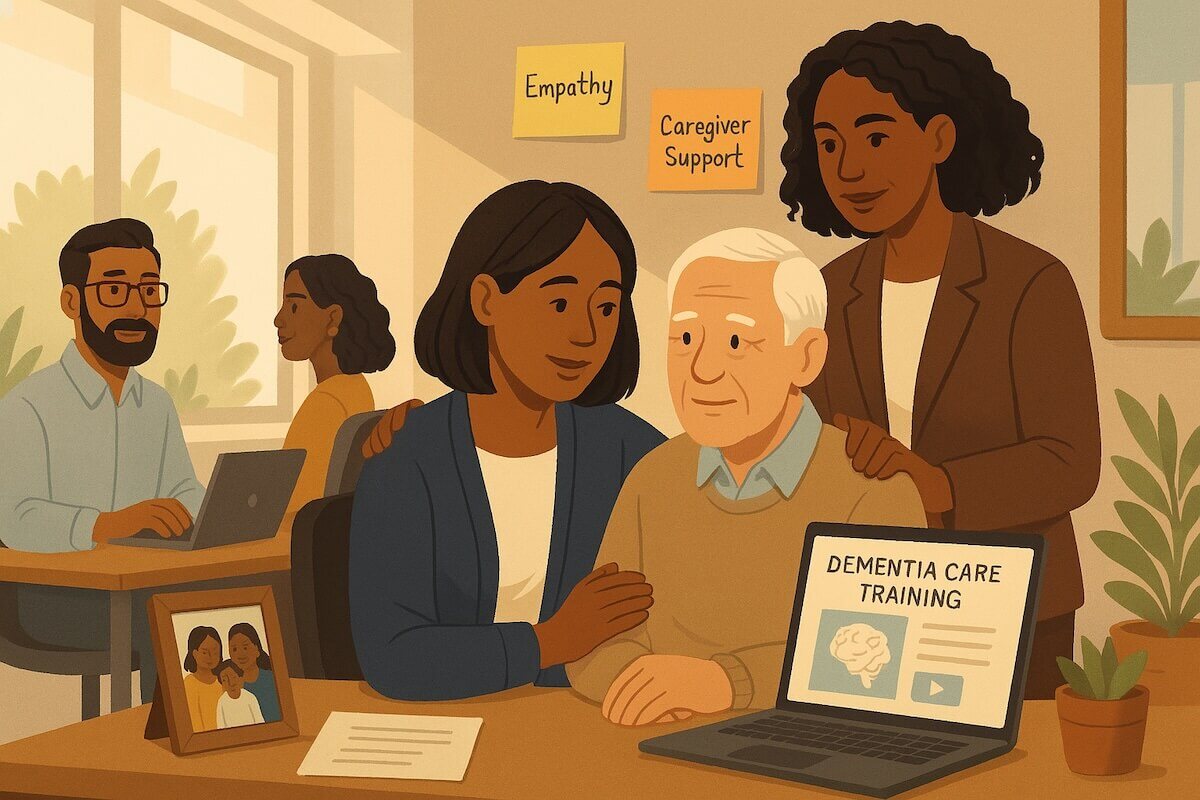

During National Adult Day Services Week, September 20–26, 2026, AGE-u-cate celebrates the professionals and programs helping older adults and family caregivers thrive. This year’s theme—“IGNITE: Purpose, Passion, and Possibilities”—invites leaders to consider the expanding role of Adult Day Services in preparing communities for aging. As Multisector Plans for Aging and federal dementia care initiatives advance, these providers are essential partners in turning policy into person-centered support.
America’s aging strategy depends on what communities can deliver every day.
For someone living with dementia, that may mean a familiar place to connect with others, meaningful activities and staff who understand changing communication needs. For a family caregiver, it may mean dependable support that makes employment, rest and personal health appointments possible.
Adult Day Services bring these needs together. As states develop Multisector Plans for Aging and federal initiatives emphasize coordinated dementia care, adult day providers offer an essential connection between policy priorities and practical community support.
For executives across aging services, health care and public policy, the strategic opportunity is clear: include Adult Day Services in planning, partnerships and workforce investment from the beginning.
The Numbers Make Dementia Readiness an Immediate Priority
The Alzheimer’s Association estimates that 7.4 million Americans age 65 and older are living with Alzheimer’s dementia in 2026. Health and long-term care costs for people living with Alzheimer’s and other dementias are projected to reach $409 billion this year, excluding unpaid caregiving.
Families carry another enormous responsibility. In 2025, unpaid caregivers provided more than 19 billion hours of dementia care, valued at over $446 billion. These figures underscore why preparing for an aging population requires sustained support for both individuals and their care partners. Alzheimer’s Association, 2026 Facts and Figures
Adult day providers already serve people with substantial support needs. A CDC report published in 2024, using 2022 national data, found that approximately 61% of Adult Day Services participants needed help with three to six activities of daily living. Most participants had at least two chronic conditions. CDC, Adult Day Services Center Participant Characteristics
For leaders, the implication is significant: adult day capacity belongs in conversations about long-term services, caregiver sustainability and dementia preparedness.
How Adult Day Services Support Multisector Plans for Aging
A Multisector Plan for Aging, or MPA, brings government agencies, community organizations and other stakeholders together to address the needs of an aging population over multiple years. These plans connect issues often addressed separately, including housing, transportation, health care, disability services and caregiving. Center for Health Care Strategies
Adult Day Services sit at the intersection of these priorities. Depending on their service model and local requirements, programs can combine social engagement, meals, personal assistance, caregiver respite and health-related services.
That makes adult day providers valuable implementation partners in three areas:
Making community living more workable. Scheduled daytime support can help families organize care around the person’s needs and the caregiver’s responsibilities.
Connecting services around the individual. Adult day teams can help identify changing needs, communicate observations to families and coordinate with appropriate community or clinical partners.
Making access a practical priority. Transportation, affordability, language access and culturally responsive programming influence whether a family can actually use available services.
An MPA becomes more actionable when adult day providers help define these operational requirements.
State Aging Plans Are Recognizing the Role of Adult Day Programs
California offers a concrete example. Its 2025–2026 Master Plan for Aging initiatives explicitly include improving access to community programs, including day programs for people with Alzheimer’s and related cognitive disorders. This places dementia-related daytime support within the state’s broader effort to help people remain in their communities. California Department of Aging
New York’s 2025 Master Plan for Aging final report also addresses adult day access. It includes proposals involving transportation partnerships, staffing, financing and expanded adult day services. These are planning recommendations with varying implementation timelines, rather than benefits that are automatically available statewide. New York State Master Plan for Aging
Together, these examples demonstrate why adult day leaders should participate in state planning discussions. They can explain what expansion requires: sufficient staffing, workable referral processes, transportation and sustainable payment.
The CMS GUIDE Model Creates a Dementia Care Partnership Opportunity
At the federal level, the Guiding an Improved Dementia Experience—GUIDE—Model connects dementia care management with caregiver education, support and eligible respite services.
Launched in July 2024 as an eight-year model, GUIDE explicitly includes adult day center programs among the settings that can provide qualifying respite. Adult day organizations therefore have a potential role in partnering with participating dementia care programs. Access and payment depend on model requirements, patient eligibility and the applicable partnership arrangements. CMS GUIDE Model
For adult day executives, readiness means being able to explain:
- Which participants the organization can safely support.
- How staff prepare for dementia-related communication and support needs.
- How referrals, attendance and changes in condition will be communicated.
- How caregiver education and respite fit into the broader care plan.
- Understanding of sensory and cognitive changes.
- Person-centered communication and meaningful engagement.
- Responses to distress that consider the individual’s needs and environment.
- Consistent collaboration with family caregivers.
These capabilities help prospective partners assess whether an adult day program can support coordinated, person-centered dementia care.
Caregiver Policy Strengthens the Case for Adult Day Services
The National Strategy to Support Family Caregivers provides another point of alignment. Its priorities include stronger caregiver services, cross-sector partnerships, financial and workplace security, and better use of evidence. Administration for Community Living
Adult day programs can support these priorities through dependable respite, family education and connections to additional resources. A caregiver may need time away from direct care while also needing help understanding communication changes or navigating community services.
The executive opportunity is to design caregiver support as an intentional part of the service experience. Clear intake conversations, regular check-ins and accessible education can help organizations respond to the family’s evolving needs.
Dementia Workforce Training Turns Policy Into Practice
Expanding access also requires preparing the people delivering care.
A person living with dementia may communicate discomfort through withdrawal, repeated questions or resistance to assistance. Staff need practical skills to recognize possible unmet needs, adjust their approach and protect the person’s dignity.
For adult day organizations, dementia workforce development should extend across the participant’s experience—from transportation and arrival to activities, personal care and family communication.
Leaders should prioritize ongoing learning that builds:
Training should also be reinforced through observation, coaching and discussion of real situations. Completion records alone provide a limited picture of staff readiness.
What Aging Services Executives Should Do Next
Adult Day Services can make a stronger contribution to aging initiatives when leaders connect policy participation with operational improvement.
Bring local access barriers and capacity needs to MPA discussions. Develop relationships with Area Agencies on Aging, health systems and GUIDE participants. Establish clear referral and communication processes. Track measures such as referral-to-enrollment time, transportation barriers, caregiver experience and demonstrated staff skills.
These steps can help organizations show where they are contributing—and where additional investment is needed. Claims about reduced hospitalization or delayed institutional placement should be supported by appropriate outcome evaluation.
Preparing communities for dementia requires a coordinated network of capable people and accessible services. Adult Day Services deserve a central place in that network.
Build Your Organization’s Dementia Readiness With AGE-u-cate
AGE-u-cate supports workforce development and caregiver education through programs including Dementia Live®, an immersive experience designed to build understanding of dementia-related sensory challenges, and Compassionate Touch®, a skilled-touch and communication approach supporting comfort and connection.
Connect with AGE-u-cate to explore dementia education that supports your Adult Day Services team, strengthens caregiver engagement and advances your organization’s role in a community prepared for aging.